The City of Cannes has announced the permanent establishment of its Dance Festival, which will now take place annually from November 21 to December 6. This event, now in its 26th edition, aims to sustainably support choreographic creation and diffusion, making dance a cornerstone of the territory's artistic landscape.
This year's program promises a celebration of dance, offering a broad panorama of contemporary creation. It will blend new choreographic works, major international names, music, cinema, and transmission initiatives. A total of 25 companies from 11 countries are expected.
A special focus will be placed on Australian creation, with the presentation of works by the Stephanie Lake Company and choreographers Amber Haines and Kyle Page from Dancenorth Australia, marking their French debut. The European independent scene will also be highlighted through the Studiotrade Platform.
Among the invited artists are renowned names such as Thierry Malandain, Emanuel Gat, Leïla Ka, Jan Gallois, Christos Papadopoulos, Marco Da Silva Ferreira, Thibaut Eiferman, Anne Nguyen, Pierre Rigal, Daniel Proietto, Silvia Gribaudi, as well as the Ballet de l’Opéra de Lyon. New pieces by Iker Karrera, Kim Jaeduk, the Modern Table Dance Company, and the Beaver Dam Company, revisiting Stravinsky's The Firebird with Edouard Hue, complete the selection.
Music will play a central role, featuring iconic scores from the 19th and 20th centuries by Mahler, Ravel, Poulenc, Saint-Saëns, and Stravinsky. Contemporary sound creations, including voices like Nina Simone and jazz rhythms, will engage with the dance. The closing evening will feature the Orchestre national de Cannes, conducted by Alice Farnham, and pianist Reina Okada, accompanying the London City Ballet in choreographies by John Neumeier and Glen Tetley.
True to its reputation as a city of cinema and dance, Cannes strengthens the dialogue between these disciplines with MOV’IN Cannes. This international dance film competition, co-directed by Didier Deschamps and Éric Oberdorff, also becomes an annual festival event.
Following a call for films, 148 works from 28 countries were received. A selection of 20 short films will be presented on Thursday, November 26. The jury draws on the expertise of international partner festivals and incorporates the perspective of the younger generation.
Master classes dedicated to dance and image are offered to students throughout the year. The 2026 jury is chaired by Jean-Christophe Maillot, choreographer-director of the Ballets de Monte-Carlo, alongside Jacques Ballard, Bénédicte Buffière, Elise Gaiardo, and Pontus Lidberg.
The festival also includes initiatives for younger audiences, with pieces by Massimo Fusco and Amala Dianor intended for families and schools. Practical workshops and a touring performance created by Emanuel Gat will be offered starting September 30 in schools and community organizations across the territory.
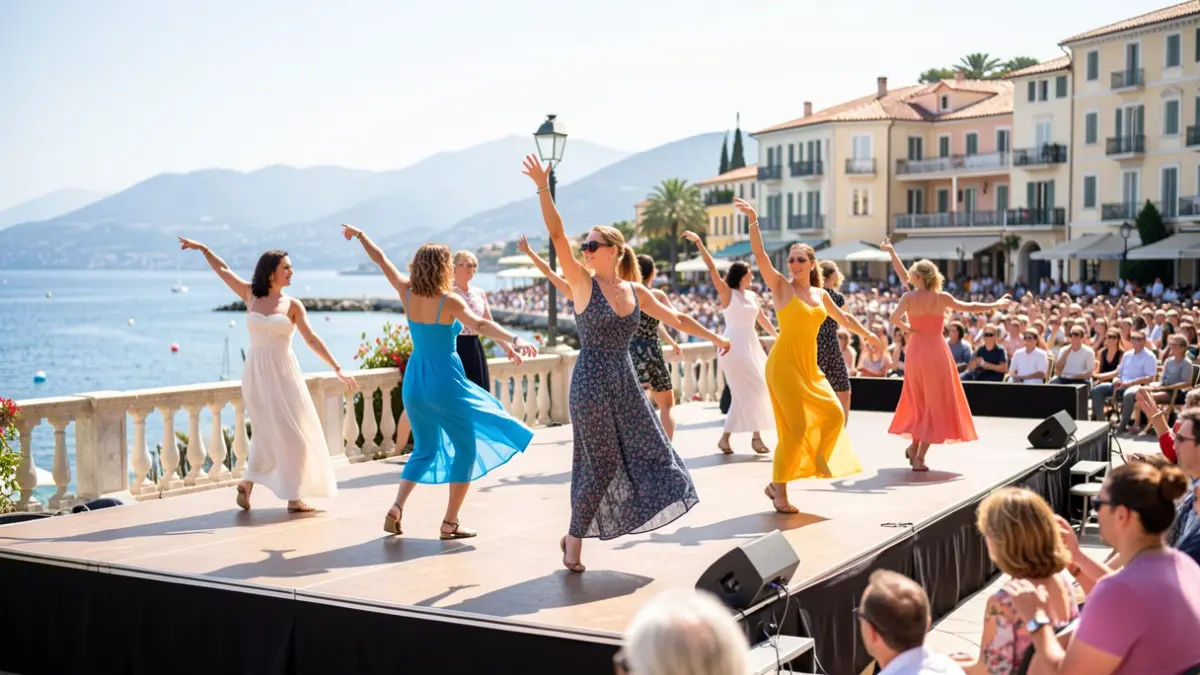
The Giga Barre, a new feature this edition, will bring dance outdoors every Sunday facing the Mediterranean, bringing together amateurs and guest artists. A round table discussion on the notion of 'classic' in global dance, organized in partnership with the National Dance Center and the University of Côte d’Azur, will complement the transmission and reflection sessions.