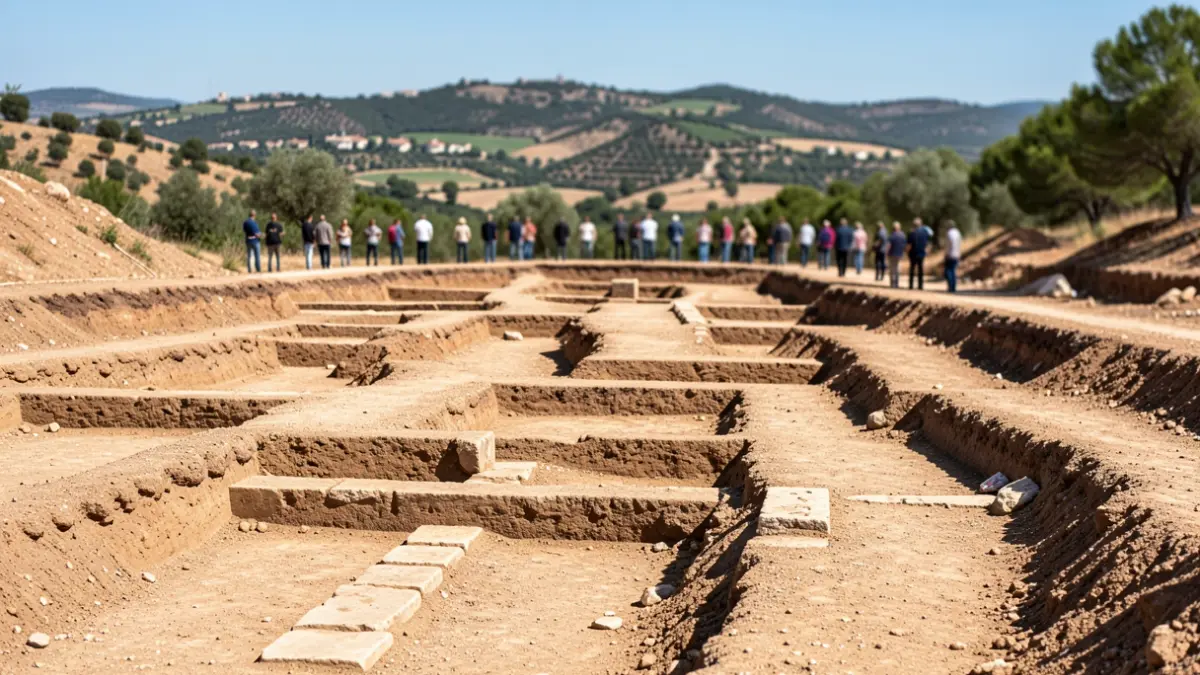
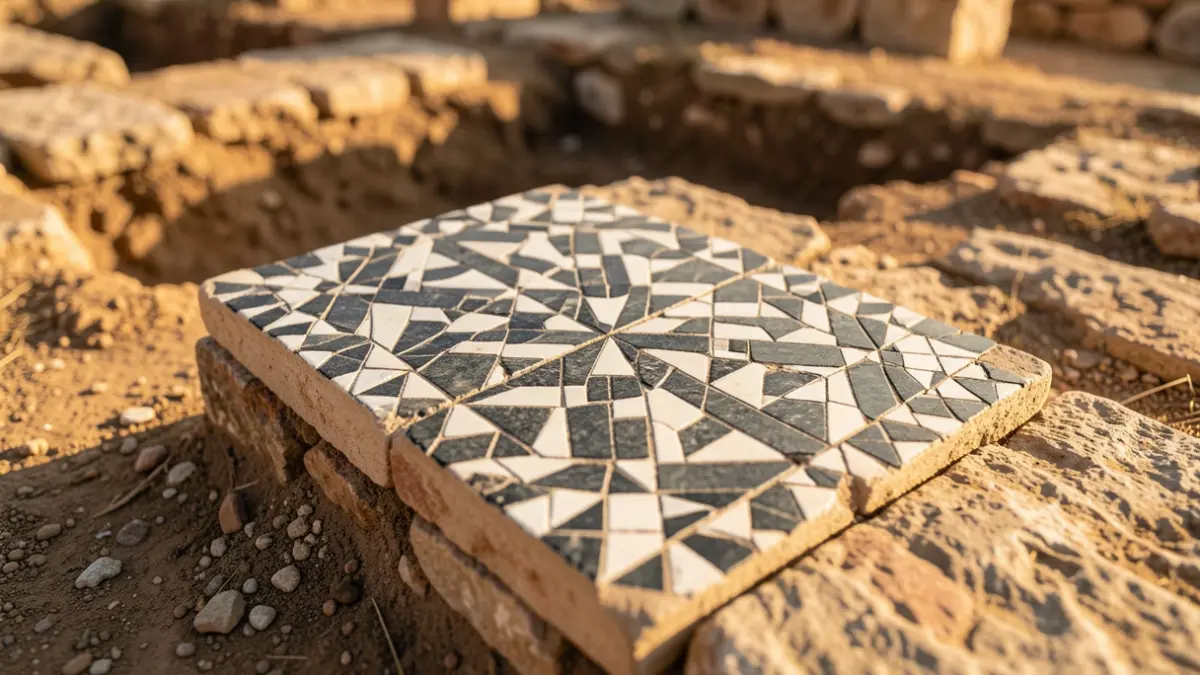
The pieces unearthed during this excavation campaign appear to belong to a high-end residence. This wealth is notably attested by the presence of decorated mosaics, including one with a black and white geometric pattern. The orientation of the structures discovered is similar to that of mosaics already identified on the same site, suggesting they all belong to a single villa built by a wealthy resident of Aix.
The history of this site dates back to Antiquity. The first built occupation identified dates from this period. Subsequently, during the medieval and modern periods, the area, after being abandoned, was used as a garden. The first construction to reinvest the area after Antiquity was the Vendôme hunting lodge, built in the 17th century outside the city limits. A residential block was then built in the 18th century to the west of the Vendôme gardens.
The discovery of these remains echoes earlier finds. In 1974, during construction work for the School of Fine Arts, three mosaics were unearthed. Two of them were destroyed, while the third, preserved in an inaccessible utility void, also features a black and white geometric pattern.