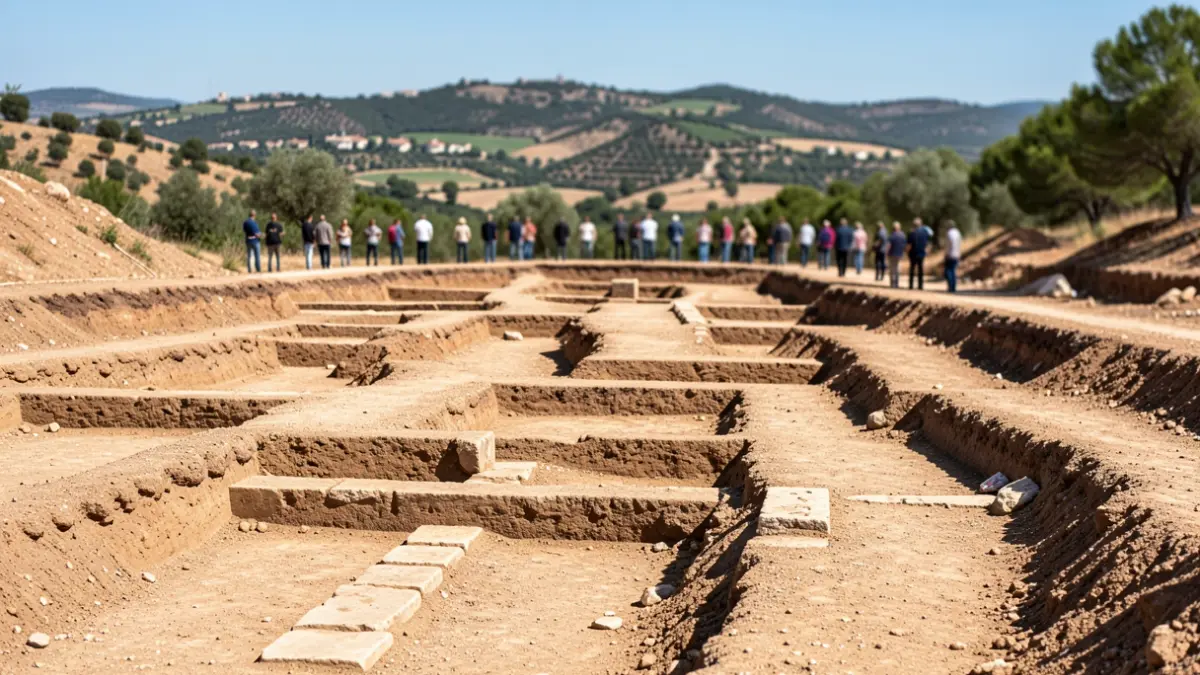
The surveys carried out in the valley of the Grand Vallat, a tributary of the Arc river, have uncovered several significant archaeological elements. These grounds, located at the foot of a hill and framed by the Étoile mountain range, the colline des Molx, and the crêt de Bouc-Bel-Air, showed signs of ancient human occupation.
Among the discoveries, evidence of occupation in front of and possibly within a rock shelter located north of parcel KC 48 was noted. The usage levels of this shelter appear to have been disturbed since the Middle Ages, a period during which it was likely occupied.
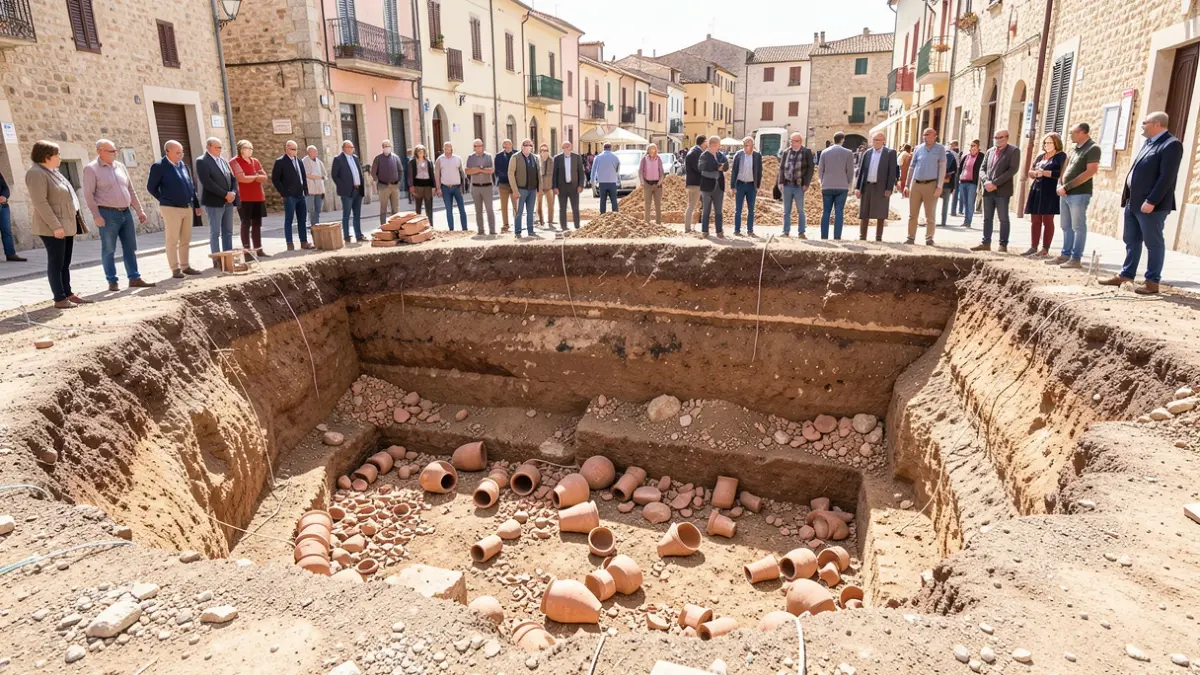
Two burials, of uncertain dating (Late Antiquity or 12th-13th century), were excavated. One of them shows the peculiarity of a decapitation. The inhumation of these bodies near a road, in an isolated location without any nearby place of worship, suggests a relegation burial.
Megalithic alignments were also identified, seemingly forming a 14th-century medieval path, possibly a type of ford crossing the thalweg of the Grand Vallat.
The archaeological intervention also provided environmental data, notably the identification of Holocene tufa deposits and phases of thalweg silting, characterized by a predominance of alluvial inputs over colluvial deposits from the Arbois plateau.