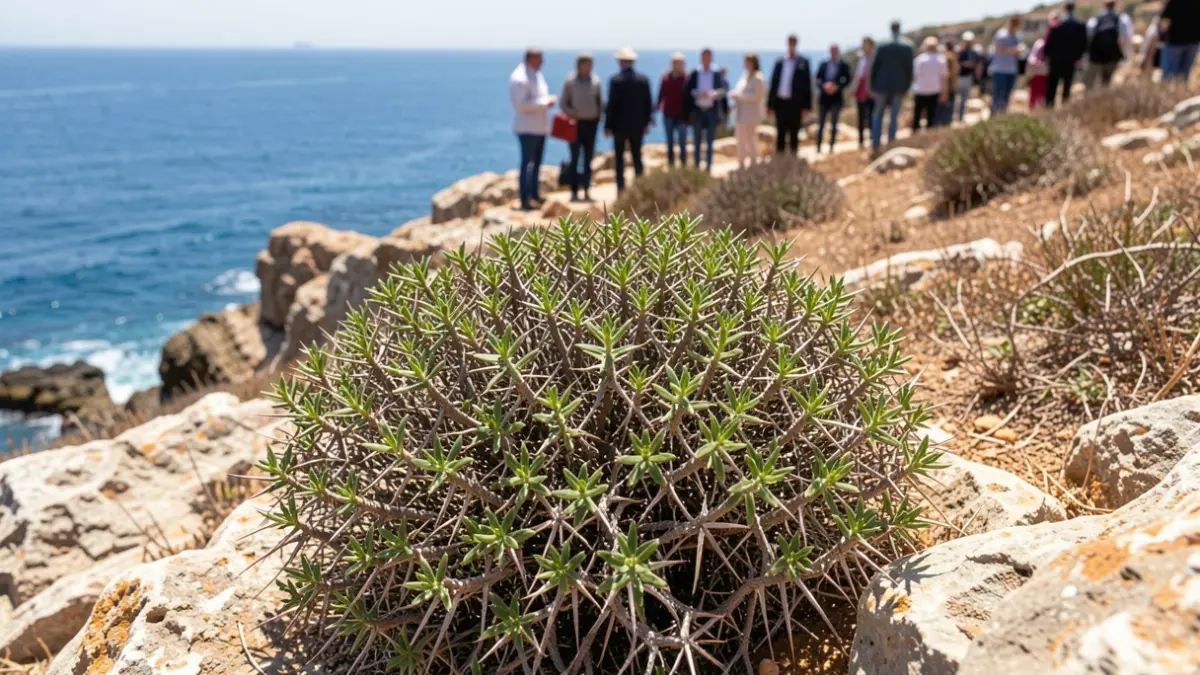
Promoting the survival of a rare and threatened plant in degraded coastal environments is a major challenge. The study focused on Astragalus tragacantha, a thorny, cushion-forming shrub found mainly along the Mediterranean coast of southeastern France. Nearly 90% of the recorded individuals are located within the Calanques National Park, south of Marseille, where populations face significant human pressure.
As part of the European LIFE Habitats Calanques project, transplantations were carried out at ten sites within the National Park. The objective was to reinforce existing populations or reintroduce the species. This initiative, conducted in collaboration with EcoStat, the Laboratoire Chimie de l’Environnement (LCE), the Laboratoire Population-Environnement-Développement (LPED), and the Calanques National Park, has been monitored for 53 months.
The findings, published in the journal Ecological Engineering, indicate an average survival rate of only 26%, with notable variations across different sites. The research, led by Lucie Miché and her colleagues, shows that plants thrive better in rocky microhabitats. However, while richer soils promote their growth, competition from herbaceous plants in these areas appears to limit their long-term survival.
These discoveries underscore the critical importance of considering ecological conditions at a very local scale to ensure the success of transplantation efforts. Beyond mere survival, the choice of microhabitats must also encourage the species' development and reproduction, thereby contributing sustainably to the conservation of this threatened plant.
This research provides essential benchmarks for refining ecological restoration strategies and enhancing the effectiveness of conservation actions for endangered plant species.