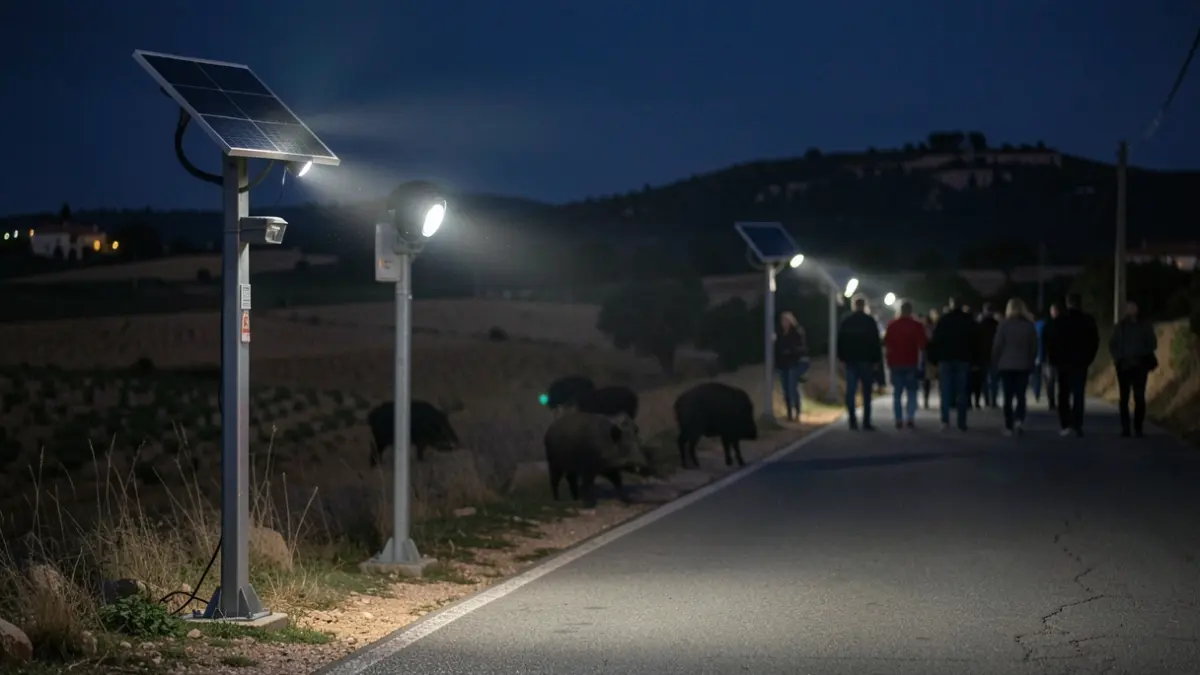
In response to numerous wildlife collision incidents, especially with wild boars, DIR Méditerranée is deploying an experimental solution on two sensitive road sections: the Chorges marsh on the N94 in the Hautes-Alpes and the Orsan area on the N580 in the Gard. These locations were identified as 'black spots' by CEREMA, based on reports from DIRMED agents.
The system utilizes detection masts capable of monitoring animal presence up to 150 meters on either side of the road. These are linked to illuminated warning panels that activate when an animal is detected on or near the roadway, alerting drivers to a potential collision risk. The system operates entirely on solar energy and is active only at night, when reduced visibility makes animal detection and danger anticipation more difficult.
This initiative pursues a dual objective: enhancing road safety and promoting the preservation of biodiversity. By alerting drivers at opportune moments, the system aims to limit collision risks while preserving the functionality of ecological corridors, without creating habituation among users or animals.
To accompany the deployment of this equipment, DIR Méditerranée has also launched an information campaign for road users, using informational signs and press releases. The goal is to present the system's operation and raise public awareness of its utility. The system has already proven effective in Chorges, with an average of 10 detections per night over the first five days of operation.