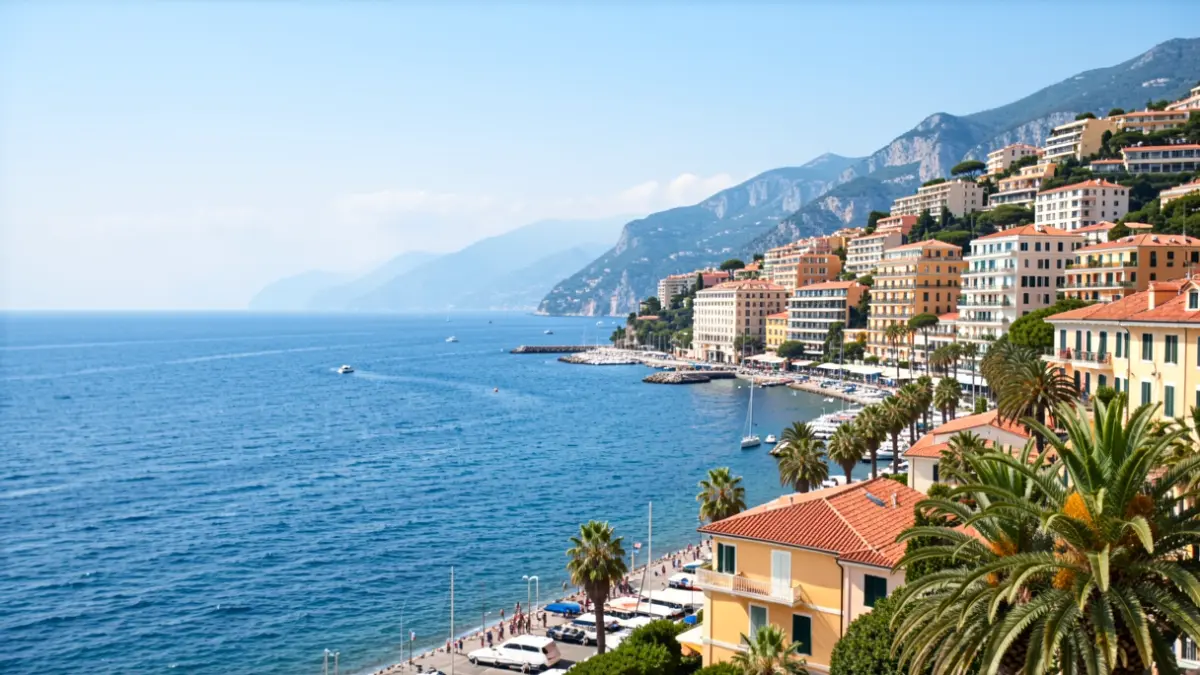
The route follows the Mediterranean and passes through Saint-Laurent-du-Var, Cagnes-sur-Mer, Villeneuve-Loubet, Antibes Juan-les-Pins, and Vallauris Golfe-Juan, forming a true summary of the region's heritage.
The start is on the Promenade des Anglais in Nice, a place steeped in history, named in reference to the British who settled there in the 19th century. This site, a UNESCO World Heritage site, is a major venue for international sports competitions.
In Cagnes-sur-Mer, Cros-de-Cagnes bears witness to its past as a fishing village, with its typical houses and 'pointus' boats recalling the golden age of fishing between the 1920s and 1930s.
In Villeneuve-Loubet, the four white silhouettes of Marina Baie des Anges, a 20th-century architectural feat labeled as heritage, mark the coastal landscape.
Antibes reveals its ramparts, remnants of a former strategic border town, offering striking panoramas between old stones and the Mediterranean.
Juan-les-Pins, a seaside resort of the Roaring Twenties, has a history closely linked to jazz, having hosted artists such as Duke Ellington and Ella Fitzgerald.
In Golfe-Juan, the course makes a detour through the place where Napoleon landed on March 1, 1815, marking the beginning of his return to power during the "Hundred Days".
The finish line is on the legendary Croisette in Cannes, a boulevard transformed from a sandy path into a world-renowned avenue, contributing to the city's international fame.
The marathon route between Nice and Cannes is thus an invitation to discover, beyond the seaside scenery, centuries of history, architecture, and culture.