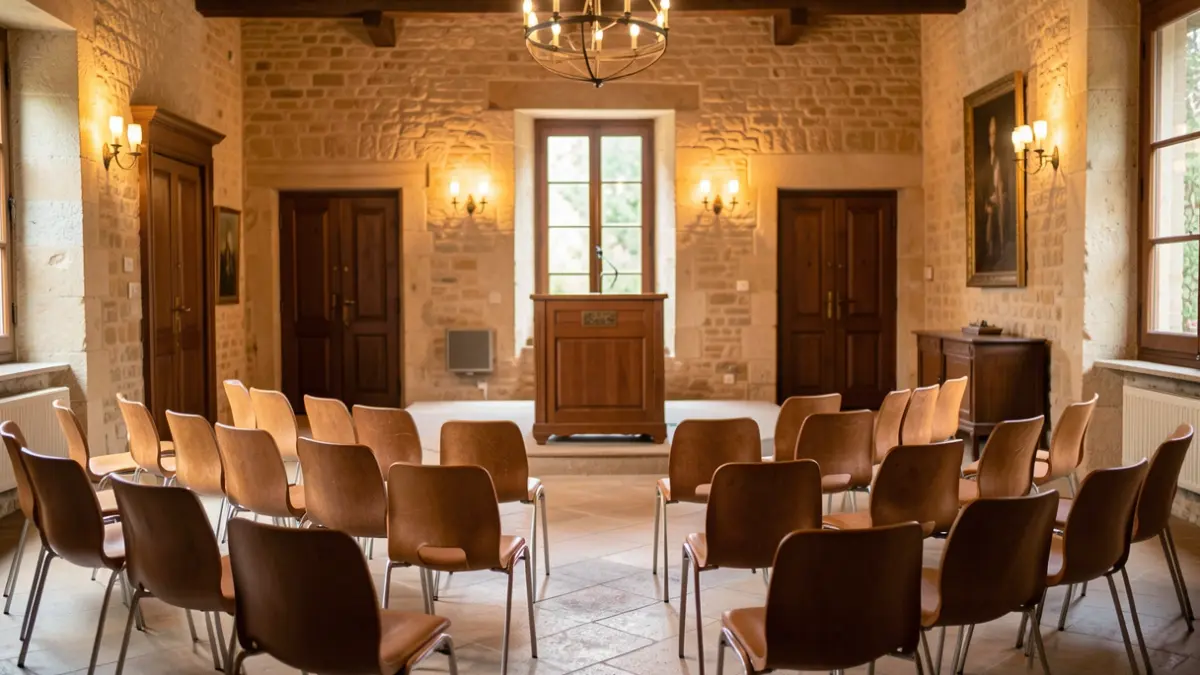
“Let's act now!” This was the strong message launched by Claire Mailhan, deputy mayor for ecological transition, during the public meeting organized by the City on November 9th. The objective was to mobilize the people of Arles to participate in the public inquiry concerning the overhead high-voltage line project connecting Jonquières-Saint-Vincent to Fos-sur-Mer and to provide them with the tools for effective participation.
The public inquiry, which began on November 9th, will conclude on December 11th, lasting 33 days. “It’s short but sufficient to hammer home our opposition to this overhead project,” stated Claire Mailhan. She recalled that elected officials and associations had already voiced their disagreement, notably at the rally on September 19th where 140 elected officials signed the “Pledge for the Future of Camargue, Crau, and Terre d’Argence.” “Now it is up to the citizens to make their voices heard to help counter the project! This is not just a matter of economic arguments; it is a conviction of the heart: if we do nothing, this territory we defend will be stolen from us!”
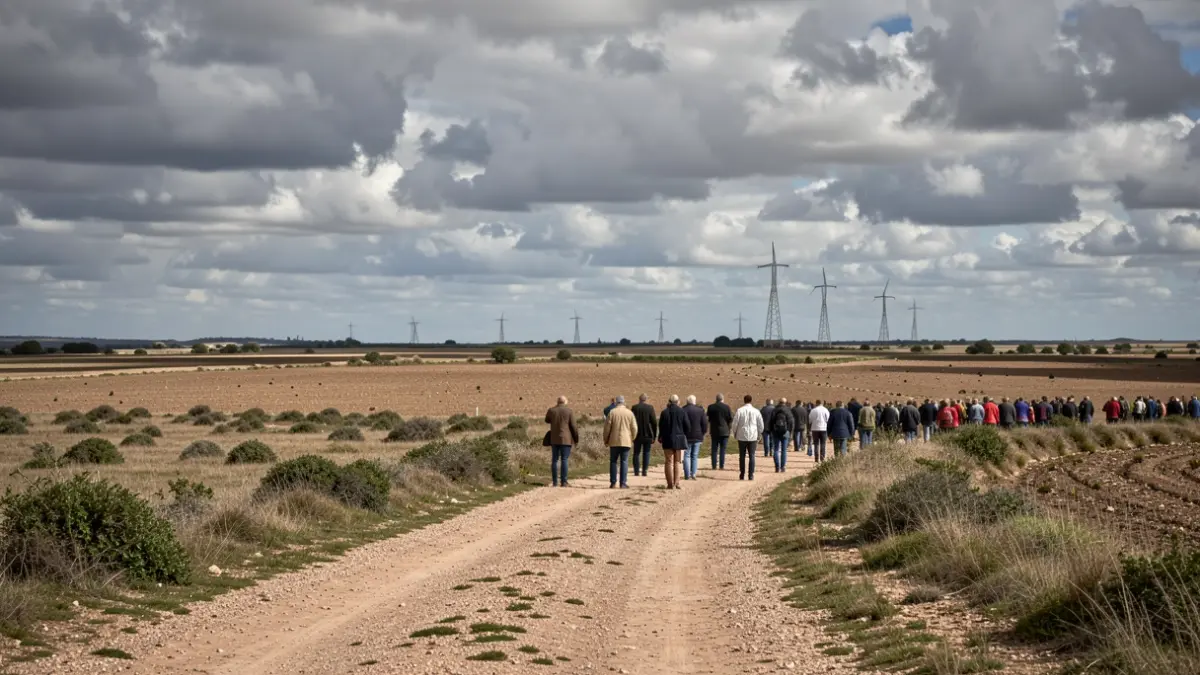
Bertrand Mazel, special municipal councilor for territorial marketing and promotion, highlighted the lack of information surrounding the project. Representatives of the collective of associations THT 13-30 then detailed the reasons for the opposition: a 65 km route with 145 pylons ranging from 40 to 120 meters high and 1500 km of cables, with an announced cost of 400 million euros. They lament the lack of precise information on the number of companies that might require this energy supply, the underestimation of the real cost, and the absence of analysis of the impacts on agriculture, tourism, health, and the environment. They also regret that the alternative solution presented by the collective has not been seriously studied.
According to RTE's schedule, a decision could be made in February, after the conclusion of the public inquiry and the submission of the inquiry commission's reports. For these reasons, elected officials and associations are calling on residents to express their opposition and questions within the framework of the public inquiry.
It is advised to clearly state an opinion (“yes” or “no”), to provide arguments, and to ask precise questions, ideally on specific themes such as the impact on human health, bird migration, or tourism activity. Examples of arguments and questions are available on the website SOS Camargue-THT.fr. It is preferable, however, to avoid “copying” and instead choose a theme. It is also recommended to ask a question that calls for a precise answer, again on a specific theme. It is possible to intervene multiple times on different subjects. Elected officials remind that “Camargue speaks to everyone” and invite people to contact friends and professional acquaintances, etc., in France and abroad, to also give their opinion, so as to “shame France for sacrificing its natural, tourist, and agricultural heritage in this way.”