The discovery of a new mosasaur species, named Garamau baucensis, was officially presented on Friday, October 2nd, at 2 PM at the Town Hall of Bouc-Bel-Air. This major scientific event, gathering researchers, archaeologists, paleontologists, and elected officials, places the commune at the heart of paleontological history.
The full name chosen by the researchers, "Garamau baucensis," translates to "Beware the cursed one from Bouc-Bel-Air!" highlighting the pride of Mayor Mathieu Piétri regarding the local connection to this discovery. The suffix "baucensis" directly refers to the commune.
This discovery dates back approximately 84 million years to the Late Cretaceous period. At that time, Provence was an island populated by fauna now extinct. Research conducted in Bouc-Bel-Air, particularly in the Sousquières district near the Celto-Ligurian oppidum, helps to better understand the earliest terrestrial settlements of this insular Provence.
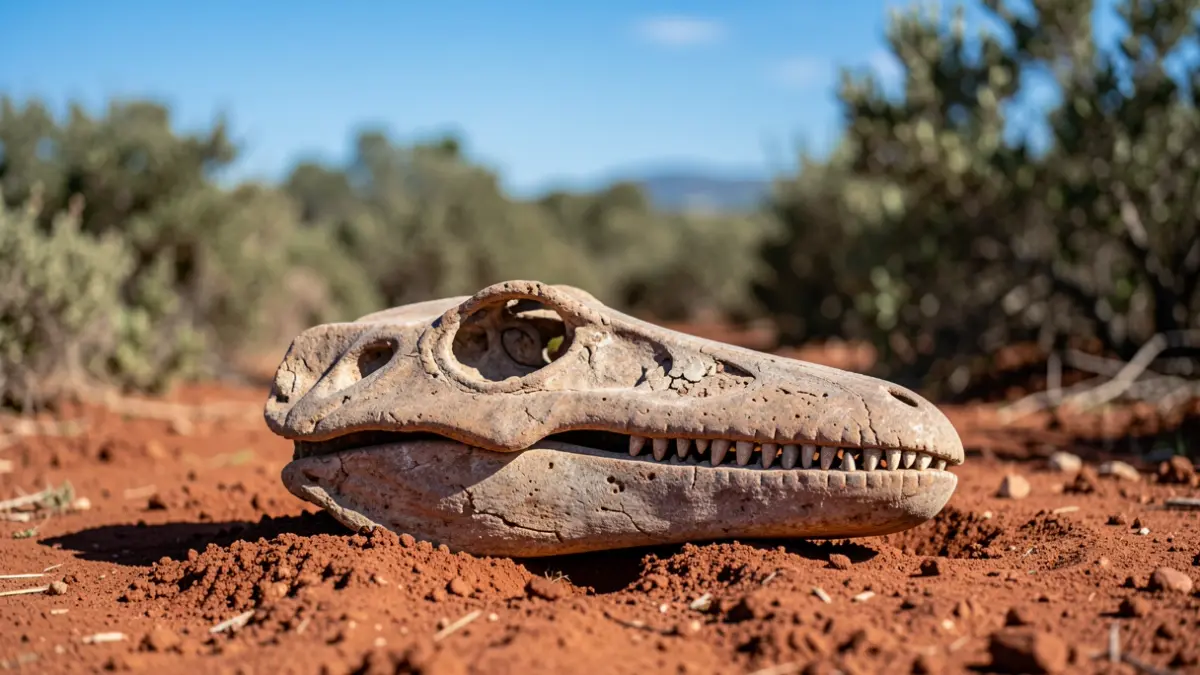
The excavation history began with the discovery of a single tooth, which led scientists to a mosasaur. Subsequent study of a skull bone revealed unique characteristics, allowing the identification of a previously unknown species. The research findings have been published in the scientific journal PCI Paleontology.
The Garamau baucensis measured approximately 2.5 to 3 meters long. Unlike the more widely known marine mosasaurs popularized by the film Jurassic World, this species lived in freshwater, in the lakes of ancient Provence. This particularity offers new insights into the diversity and evolution of these Cretaceous predatory reptiles.
In addition to the mosasaur, excavations in Sousquières have uncovered other fossils currently under study, including remains attributed to raptor-type dinosaurs, fish (including an exceptional skull), and potentially a new species of turtle. The subsoil of Bouc-Bel-Air may still hold further surprises.
The commune of Bouc-Bel-Air is now inscribed in scientific nomenclature. A major exhibition dedicated to these discoveries is planned for 2027, allowing the public to discover the fossils and better understand what their territory looked like 84 million years ago.
“"Garamau baucensis had already chosen the territory that is today our commune!"