Exposure to certain bacteria during larval development in Drosophila (fruit fly) can shape the adult fly's gustatory response to peptidoglycan, a major component of bacterial cell walls. This is the finding of research by Romane Milleville, a PhD student in Professor Julien Royet's team at the Institut de Biologie du Développement de Marseille (IBDM), in collaboration with the CSGA in Dijon.
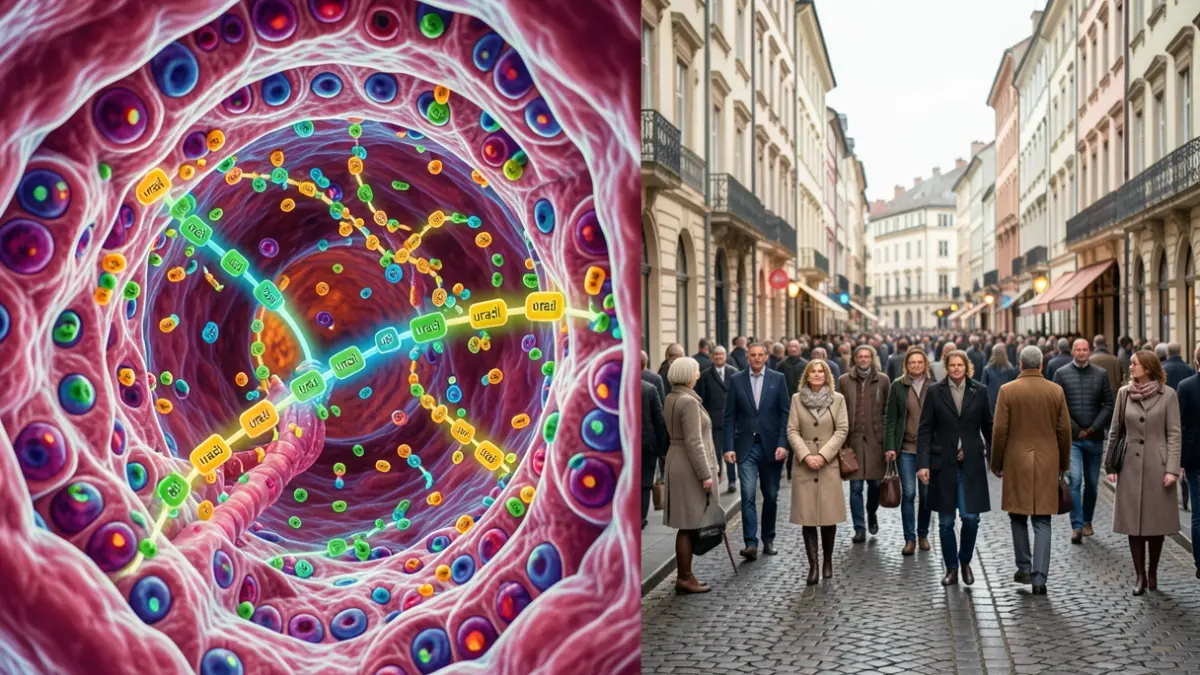
The key player is uracil, a bacterial metabolite that triggers a chain reaction in the larval gut. By triggering Duox-dependent production of reactive oxygen species (ROS), uracil activates a specific population of larval sensory neurons expressing the ion channel TrpA1. This early signal ultimately shapes how the adult fly responds to bacterial cues.
These findings reveal a link between gut microbes, developmental signals, and sensory plasticity. The microbial environment experienced early in life can leave a lasting mark on how an animal perceives its world. The takeaway? In flies, what happens in the gut during childhood doesn’t necessarily stay in the gut!