Long perceived as immutable, glaciers tell a story that extends beyond the alpine peaks. They bear witness to our relationship with life, water, and deep time. As part of the International Year of Glaciers and the Decade of Action for Cryospheric Sciences (2025-2034), the Ecrins National Park has compiled knowledge from its teams to share it widely. A booklet has been created to address these issues and foster a better understanding of the role of glaciers, the water cycle, their current transformations, and their impacts on natural environments and human societies.
Raising awareness, transmitting knowledge, and awakening attention are essential levers for preserving these fragile heritages. The goal is to support the Park's partners in the necessary transitions to address climate change.
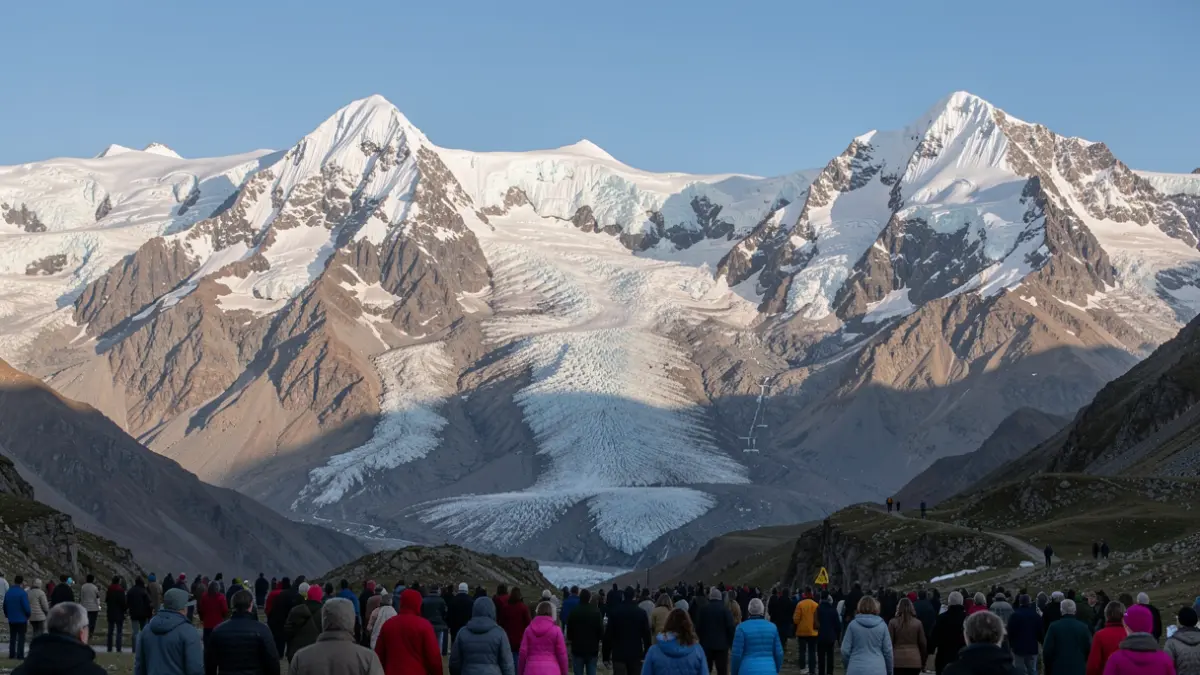
The Ecrins massif is home to about sixty glaciers. These ice masses are not merely emblematic landscapes; they are witnesses to the world's evolution and valuable climate indicators. They also host fragile ecosystems and play a key role as freshwater reservoirs. However, these glaciers are directly affected by global warming, leading to accelerated retreat, the disappearance of some, and ice collapses. These phenomena have direct consequences on the stability of mountain environments and increase natural risks for human activities.
Faced with these threats, their preservation is a major concern for the international community and the Ecrins National Park. This booklet was produced in this context, with financial support from the BiodivTourAlps - ALCOTRA project.
The booklet will soon be available in print at the Park's visitor centers and on their online store. It can already be downloaded for free in PDF format from the Ecrins National Park's media library.