
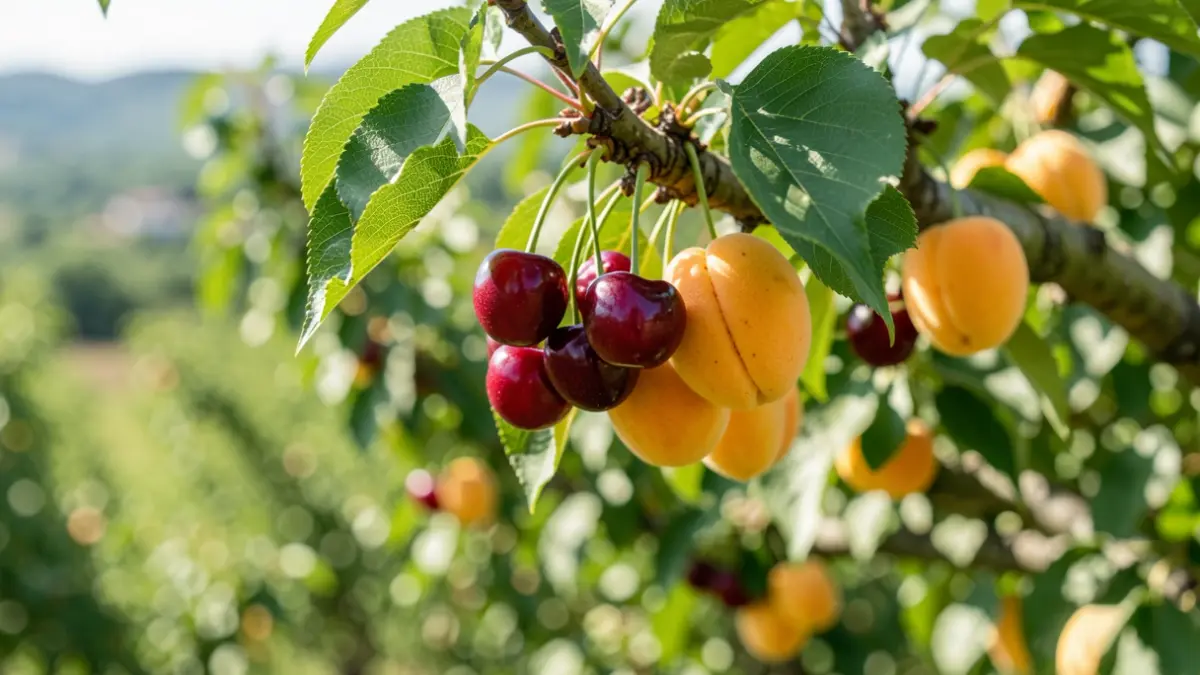
Launched in 2021, this project aims to revive local fruit production by testing different varieties and rootstocks on two orchards located in an area exposed to flooding. Monitoring is carried out by the Var Chamber of Agriculture, with financial support from the agglomeration for technical management. The goal is to evaluate the trees' adaptation to local conditions, their resistance to climatic and health hazards, and their profitability.
After the first apricot harvests in 2024, farmers were able to observe the appearance of the first cherries in 2026. These data help to better understand the behavior of the different varieties planted. A technical meeting allowed these first results to be shared with local farmers, in the presence of Jean Cayron, vice-president of the agglomeration in charge of Agriculture and mayor of Roquebrune-sur-Argens.
This initiative is part of the 'Preserve and develop sustainable and subsistence agriculture' axis of the PAT. It aims to establish technical and economic references to encourage the return of arboriculture in the Basse Vallée de l'Argens and diversify production in the face of climate change. Monitoring over several years remains necessary to identify the best adapted solutions.