The summer of 2026 was marked by a heatwave and drought of unprecedented intensity and earliness in southeastern France. Faced with a prolonged lack of significant rainfall, the Sainte-Baume Regional Natural Park has released a quarterly bulletin on the state of groundwater resources in this massif, which is vital for drinking water supply and supporting regional rivers.
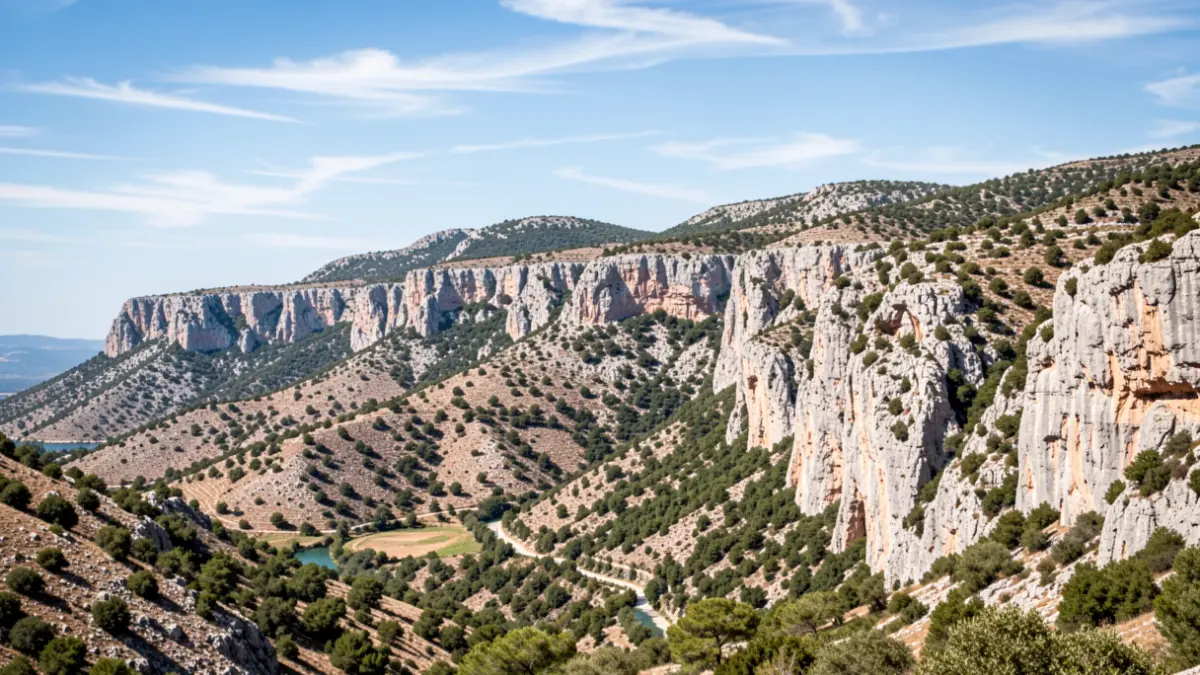
The Sainte-Baume massif, considered a water tower of Lower Provence, hosts numerous karst springs that feed rivers such as the Gapeau, Huveaune, and Argens. This significant groundwater resource plays a crucial role in maintaining river flows during the summer low-water period and in supplying drinking water to surrounding communities.
Meteorological data collected between September 2025 and September 2026 from three stations (Plan d’Aups Sainte-Baume in the north, Méounes-lès-Montrieux in the east, and Le Castellet in the south) indicate slightly lower average maximum temperatures in the southern part of the massif. In terms of rainfall, the east received the most precipitation (1453.8 mm annually, 1026.1 mm in winter), while the south recorded the lowest totals (911.5 mm annually, 516.8 mm in winter).
Continuous monitoring of two spring stations reveals that the end-of-August 2026 low-water flows were slightly higher than in 2025, suggesting more effective winter recharge. The Saint-Pons spring (Gémenos), described as 'buffered,' maintains a minimum flow of around 10 l/s, although it neared drying up for a few days in October 2022. The high springs of the Caramy (Mazaugues), which react more quickly to rainfall, also show a higher low-water flow compared to the previous period.
A targeted measurement campaign of karst spring flows, conducted in early September 2026, shows generally satisfactory results for the late low-water period, despite two stations being dry (Huveaune springs and the Cauron stream). Overall, the groundwater tables of the Sainte-Baume massif, well-recharged by winter rains, have maintained a continuous supply to the main headwater rivers and contributed to sustaining the dependent aquatic environments.
Despite this positive hydrological assessment, the prefectures of Bouches-du-Rhône and Var maintain vigilance and drought alert statuses for certain river basins, urging populations to conserve water. The situation will be closely monitored during the autumn period, which could become critical if the dry spell continues.