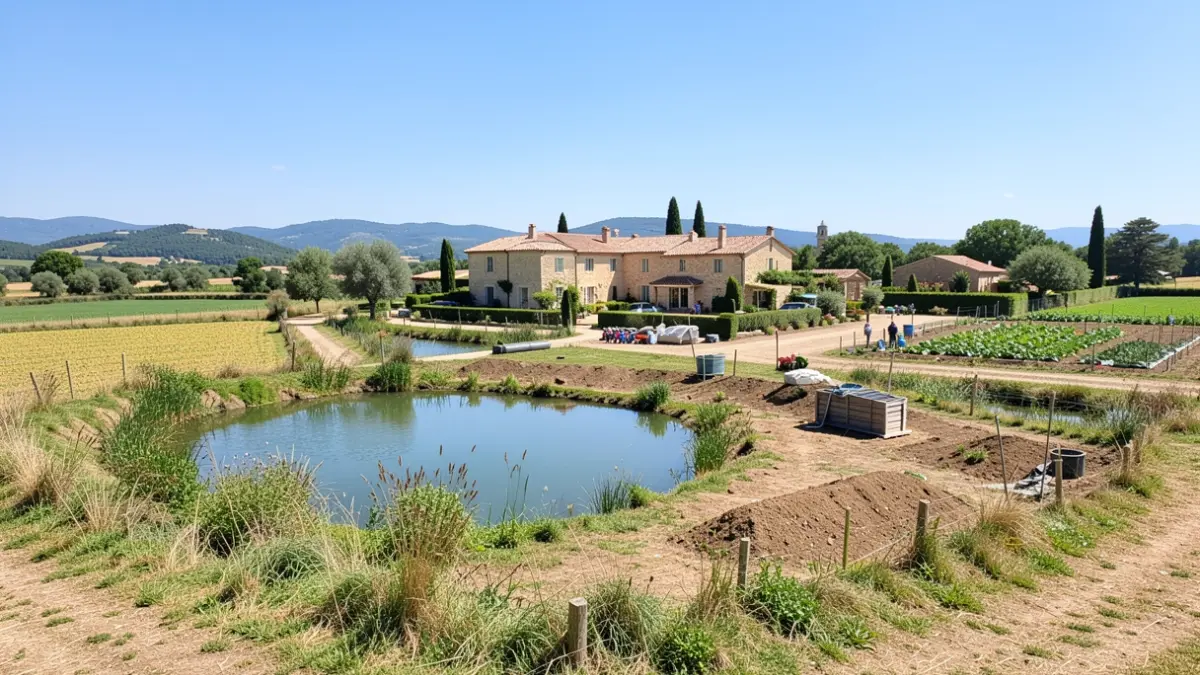
The EcoCARE project aims to place the preservation of water heritage, agriculture, and sustainable food at the heart of territorial concerns. Supported by the National Research Agency (ANR), the initiative will deploy ecological transition actions over three years to develop a sustainable strategy for water-related issues.
The method relies on co-design, bringing together experts, local authorities, associations, and residents. This participatory approach will enhance the restored hydraulic heritage and explore new models of food resilience at the Domaine de Fabrégas site.
Locally, the association ReconnectNature, chaired by Kalliopi Pediaditi-Prud’homme, is relaying this initiative, notably through workshops in the media libraries of La Seyne-sur-Mer.
An explanatory conference on the EcoCARE project is organized, led by the European project team, including researchers from the LAREP laboratory of the Ecole nationale supérieure du paysage de Versailles, the Atelier d’architecture autogérée (AAA), and the Conservatoire du Littoral. Experts such as Constantin Petcou and Simon Ricard will share their knowledge.
Facing the destabilizing impacts of climate change, the EcoCARE project, a European research initiative involving six countries, aims for urgent action. In La Seyne, a French team is working with the Conservatoire du Littoral, the TPM Metropolis, and the City of La Seyne-sur-Mer to establish a living lab for participatory regenerative ecology. This living lab principle brings together researchers, institutions, associations, and citizens to address urgent issues in concrete contexts.
Residents of La Seyne are invited to actively participate in workshops, eco-prototypes, and the sharing of best practices, particularly concerning water and biodiversity. The Sunday exchange conference is part of this effort.
The project team emphasizes the need for collective involvement in addressing the effects of climate change. Drawing on their experience, researchers and professionals are leveraging their international networks to support local initiatives.
Similar living labs already exist abroad, recognized as 'agents of change'. The Atelier d’architecture autogérée (AAA) is a pioneer in this movement, having initiated resilient citizen practices in the Paris region with the R-Urban eco-citizen units.
While three years represent a beginning, the project aims to launch momentum and create a 'community of practice' that will continue and scale up its actions.