After spending several years in freshwater, the European eel undergoes metamorphosis into a 'silver' eel and begins a migration to the sea for reproduction. This downstream migration, known as 'dévalaison', is a crucial stage in its life cycle. However, the number of eels leaving the Rhône basin remains difficult to assess, despite this knowledge being vital for monitoring the species.
The GuidRhône project, funded by the Rhône Méditerranée Corse Water Agency and CNR, will run for three years. It aims to study the feasibility of a system to estimate the flow of silver eels in the river and characterize their migration, considering factors such as the time of year and the fish's health.
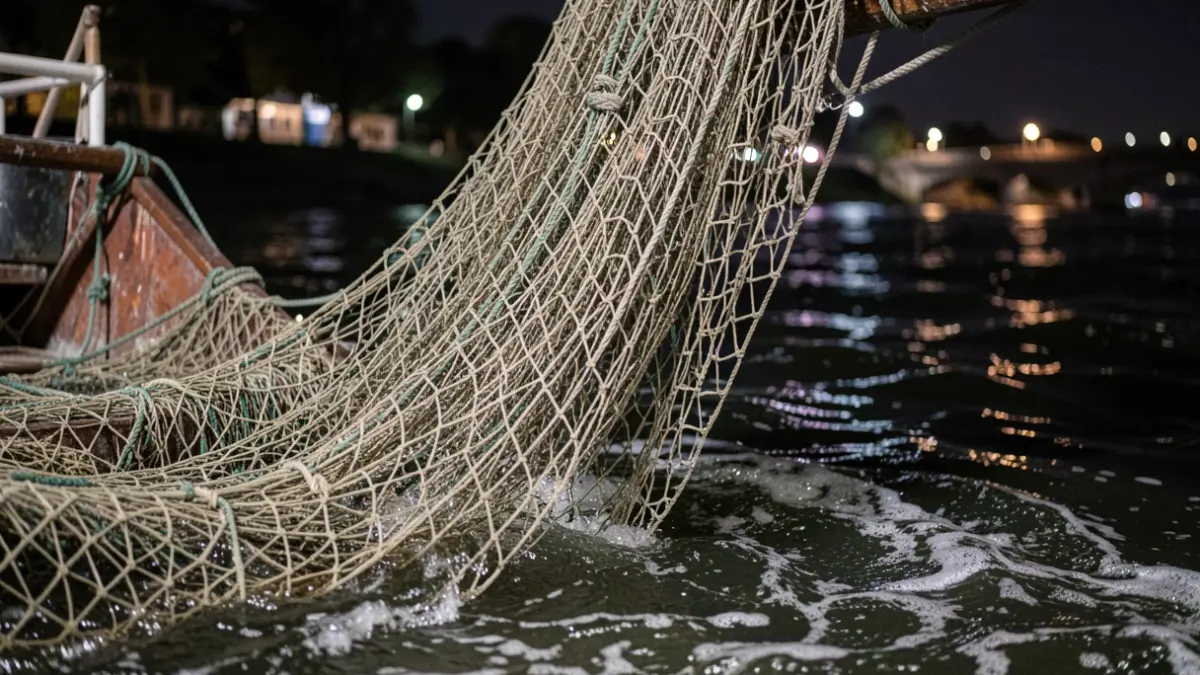
Two main methods are being tested. The first is 'guideau fishing', a traditional technique involving deploying a large net from a boat. Eels moving downstream with the current are captured, counted, and measured before being released. This system will be tested in the lower Rhône, between Avignon and the Beaucaire facility, primarily at night during the presumed migration period (September to early spring), based on hydrological conditions provided by CNR.
The second method involves installing two acoustic cameras near the Pont d'Aramon. These cameras use sound waves to produce 'digital images' of organisms in the water, allowing continuous observation of fish passage even in turbid conditions or at night, without affecting the fauna's natural behavior. The goal is to compare these observations with guideau catches and determine if this technology can support long-term monitoring.
Captured eels will also be measured, weighed, and their silvering stage and health status will be assessed. Complementary methods such as capture-mark-recapture and acoustic telemetry will also be employed. The Beaucaire-Aramon site was chosen because it allows tracking eels from over 97% of the Rhône basin's watershed.
This multidisciplinary project brings together INRAE (RiverLy and DECOD units), the National Museum of Natural History (MNHN), professional fishermen (AAIPPED, CONAPPED), CNR, and is part of the network of stakeholders involved in migratory fish monitoring, including the French Office for Biodiversity (OFB) and the Migratory Fish Management Committee (COGEPOMI).
Ultimately, GuidRhône aims to establish a long-term monitoring system to estimate the annual abundance of silver eels leaving the Rhône basin and assess their health. This will contribute to predicting the future of this endangered population and implementing appropriate management actions.