SYMADREM, responsible for the development of the Rhône delta dikes and the sea, is extending its missions to the management of aquatic environments and innovative environmental projects. A concrete example is the management of a two-hectare wetland located in the Beaucaire-Fourques sector.
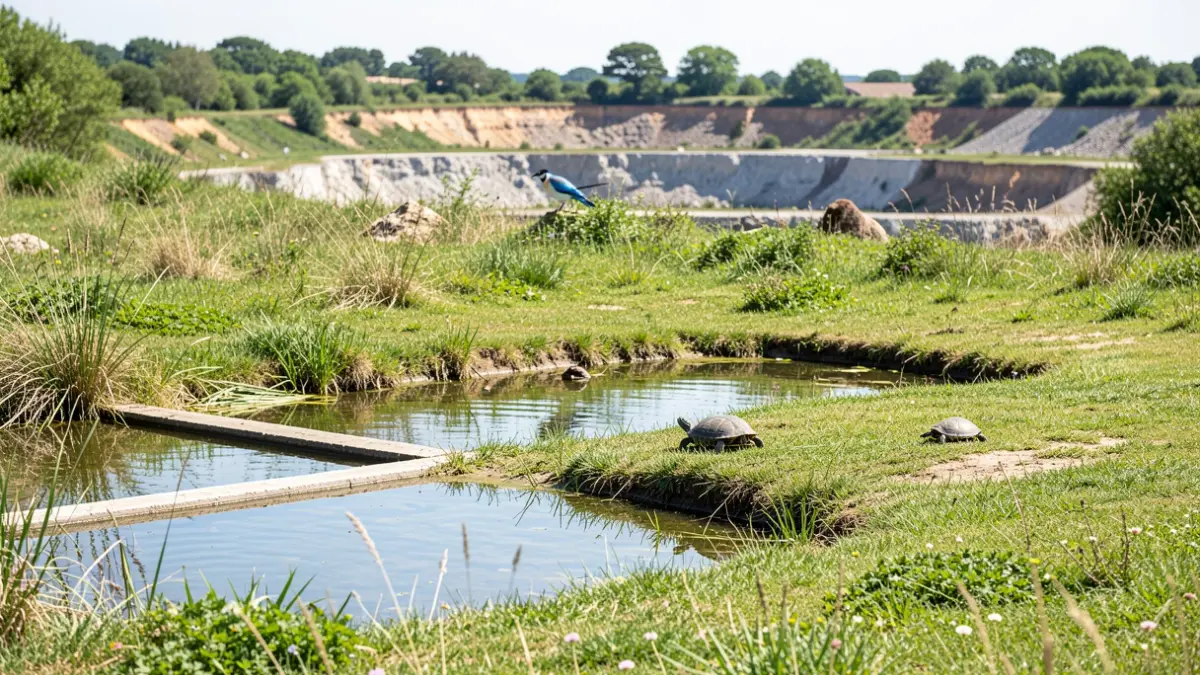
Since 2024, SYMADREM has been managing this natural site, originally created as an borrow pit for the reinforcement works of the Beaucaire-Fourques dike. After the completion of the project, the environment closed in, but SYMADREM wished to preserve its ecological interest by engaging in voluntary management, in accordance with the regulatory ERC sequence (Avoid-Reduce-Compensate).
This wetland, consisting of two permanent ponds and one temporary pond, has become a precious habitat for fauna and flora. Developments have been made to attract the European pond turtle, a species classified as near threatened by the IUCN, by offering it sunny resting areas. SYMADREM has also reopened a quarry face to accommodate the European roller, with four nests of this bird having been observed. The presence of beavers, roe deer, and foxes has also been identified.
Regular ecological inventories allow for monitoring the evolution of species, including the Crete forget-me-not, a plant listed on the IUCN Red List. Actions to restore hedges and combat invasive alien species are also being carried out.
The experiment of grazing by six horses, belonging to a farmer from Fourques through an agreement, aims to determine if this practice is sufficient to keep the environment open. Two years after the project's launch, it appears that grazing helps to limit the closure of the environment but requires complementary human interventions for optimal maintenance.