Our history page takes us back to 1913 to recall the greatest railway disaster that saddened the Alpes-Maritimes department. In a time when some 150 kilometers of tramway lines served numerous villages and towns, the tram connecting Cagnes and Grasse departed from Pré-du-Lac station on the evening of September 17th in pouring rain.
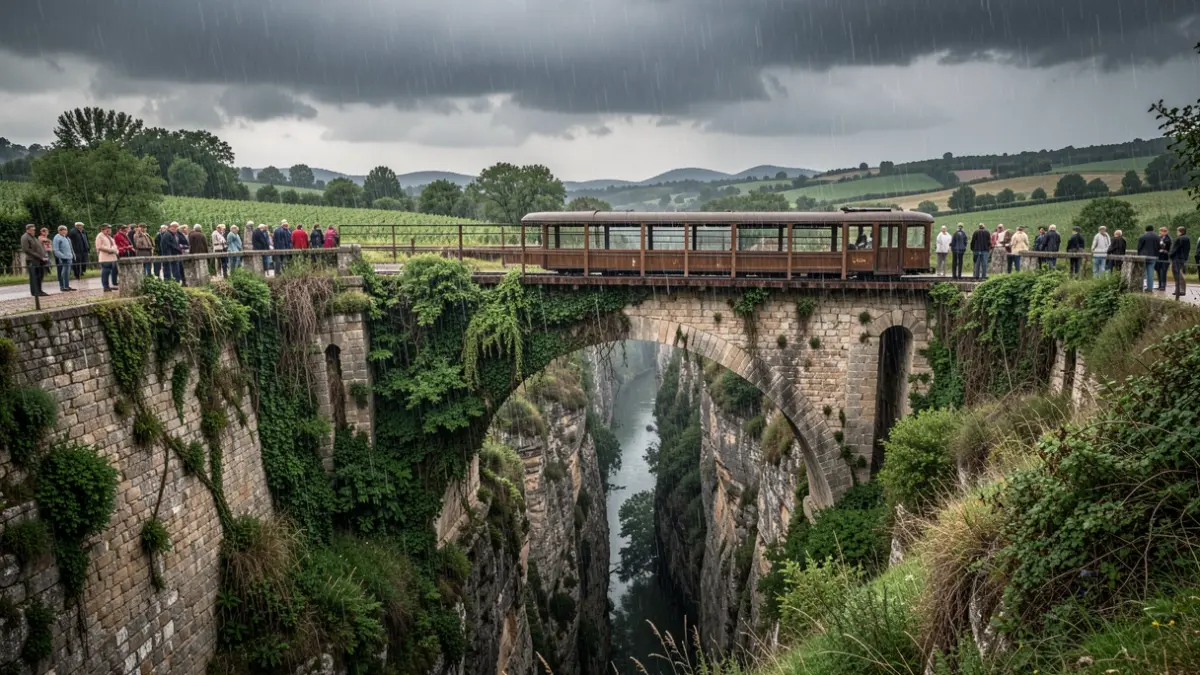
The convoy, consisting of two motor cars and two passenger cars, was crowded, carrying many soldiers who were to rejoin Nice. On the descent, the train accelerated uncontrollably, and its driver could not brake the entire set as it approached at high speed the curve before the "viaduc des vignes" (vineyard viaduct), which spans a ravine about twenty meters deep in the commune of Villeneuve-Loubet.
The accident was inevitable. As the first motor car hit the parapet, the other three derailed and plunged into the valley. In this then deserted countryside, alerting rescue services was difficult. The first to arrive were a few inhabitants from surrounding farmhouses, while some survivors set off towards the villages to transmit the disastrous news by telegraph or telephone.
Despite the difficulties, rescue efforts were organized. Dr. DE ALBERTI, a passenger in the first, miraculously spared car, organized initial aid with soldiers. They were soon joined by colleagues from Cagnes who arrived by car with their medical equipment. Reinforcements followed: an ambulance from the automobile club, a military artillery park "ambulance car," and two trucks carrying a detachment of 15 firefighters from Nice, commanded by Captain CONSTANTIN.
The press of the era described the scale of the tragedy: "By the light of the firefighters' torches, acetylene lamps, and lanterns requisitioned from everywhere, work was carried out. But it was very difficult to extricate the injured. The three cars had overturned on top of each other, and the sodden earth sank under their weight, which exceeded thirty tons. The rain raged, and the wind whistling in gusts through the trees misled those searching for the injured, fumbling in the darkness and guided by moans." At three in the morning, after the injured were freed, Prefect André De JOLY decided to suspend operations until daybreak.
On September 18, 1913, 35 Nice firefighters assisted soldiers from the 7th Artillery Regiment in the "force maneuvers" to free the last bodies by lifting the deformed wreckage of the train cars. The final toll was 17 dead, including 12 soldiers, and 40 injured.
The press at the time highlighted the dedication of the fire brigade, commending Captain Constantin and Lieutenant Poullan for their foresight and speed. The detachments from Nice worked tirelessly in the rain. Prefect De Joly expressed great satisfaction with the courage and dedication shown by the firefighters.
Even today, not far from the road connecting Villeneuve-Loubet to Roquefort-les-Pins, the remains of a tramway track still exist, including its "pont des vignes," where a plaque commemorates this catastrophe from 113 years ago.